

Certificate Course
Foundation Course in Psychodynamic Psychotherapy
Program Overview
Program At a Glance
- Duration: 15 months
- Teaching hours: 135 hours of theory sessions
- Weekly commitment: 3 hours of lectures + 1 hour of self-study
- Case work: One long-term case, supervision, and final project
Key Dates
- Ongoing cohort (Admissions closed)
- Application Deadline: 30 November 2025
- Interviews Begin: 1 November 2025
- Enrollment Completion: 15 December 2025
Fee Structures
- Primer (Jan–Mar 2026): INR 39,599
- Main Training (Apr 2026–Mar 2027): INR 99,625
- Final Submissions & Certification: Apr–May 2027
- All prices exclusive of GST.
- Installment options available. Contact info@theparc.in
We are planning future cohorts of the Foundation Course in Psychodynamic Psychotherapy.
Register your interest to receive updates when enrolments open.
What is Psychodynamic Psychotherapy?
A form of long-term therapy that helps uncover unconscious processes which impact a person’s current emotions and behaviours. Psychodynamic psychotherapists take a curious and exploratory stance and use the therapeutic relationship to understand and improve current relationships.
Who is it for?
It requires a sound understanding of psychological processes and at least two – three years of experience as a therapist. Suitable for all clinicians who practise regular psychotherapy- psychiatrists, psychologists, counsellors, psychiatric social workers.
About The Course
A certificate course on the basics of psychodynamic psychotherapy that will function as a core program and stepping stone to more advanced psychotherapies or psychoanalysis. The FCCP course is a 15 month commitment with an evaluation at the end of the first three months to determine eligibility for the remainder of the course. Evaluation at different stages of the program includes assignments, summative assessments, case summary and project reports. Candidates only pay a three month fee at the beginning and will pay the remainder at the start of month four.
Requirements for primer (months 1-3)
- Masters in psychology, or accredited counselling course with minimum two years of clinical experience post highest qualifying exam. Qualified psychiatrists and psychiatric social workers with a minimum 2 years of clinical experience post the highest qualifying exam can also apply. Students will need to be seeing patients in some therapeutic capacity or have a source of referral. Students can charge for their cases as per their standard rate of therapy.
- Written statement of purpose with application.
- Reference letter from supervisor / colleague.
- Intake interview with course faculty.
Entry criteria for main course (months 4-15)
- Intake interview.
- 80% attendance in first three months.
- Personal therapy.
Duration of the
course
- The course will be conducted entirely online.
- A combination of didactic lectures and interactive sessions with small group discussions and experiential learning.
- 135 hours of theory sessions spread over 15 months.
- 3 hours of lectures + one hour of self-study every week.
- A mandatory prescribed reading list will be provided to complement weekly theory modules.
Minimum requirements to pass the course
- 80% attendance in theory/seminar sessions.
- Completion of an assignment at the end of every module.
- Case summary.
- Project submission.
- Participation and attendance in fortnightly reading groups (evaluated by supervisors).
Additional clinical components
- Supervised long case: Students will need to take up a long case for psychotherapy under supervision with a prescribed supervisor for a minimum of 40 weekly sessions starting month four. At the end of 40 sessions, they will need to write up a summary of the case using the principles learnt during the course, which will have to be at- tested by their supervisor.
- Briefcase/project: Students will have to take up a brief reflective project that involves any of the following: community engagement, psycho-education, group work, teaching seminars. Students can complete this project in pairs.
- Mandatory Supervision: Students will be allocated to a supervisor who is psychodynamically oriented and will be required to see them once a week in a group setting. They will also have quarterly review with the course director.
*Spots are limited and enrolment will be through an application and interview process; enrolment and admissions to be completed by (date).
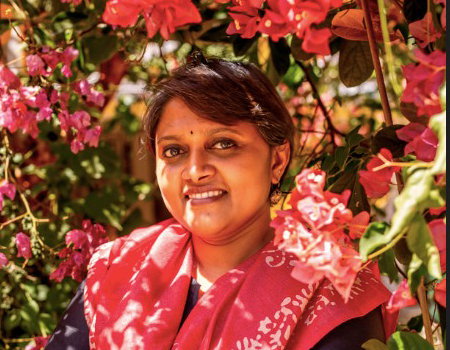
Know your faculty



Course Curriculum
Module 1: Entering the Therapeutic Space (Foundations and Safety)
- Establishing the Frame: Beginnings, Contracts and Engagement
- Holding the Frame: Boundaries, Safety, and the Ethics of Therapeutic Structure
- Essential Therapy Skills — Part 1
- Essential Therapy Skills — Part 2
- Thinking Psychodynamically: Formulation and Therapeutic Style
- Inside the Hour: Anatomy of a Psychodynamic Session
- Culture in the Consulting Room: Cultural Sensitivity as Clinical Competence
Module 2: The Therapeutic Relationship (Core of Psychodynamic Work)
- Building the Therapeutic Relationship
- Rupture and Repair: Working Through Relational Strain
- Defence and Adaptation: How the Mind Protects Itself
- Transference, Resistance and Countertransference (Part I): Recognising the Relational Field
- Transference, Resistance and Countertransference (Part II): Using the Relationship as Intervention
- Moments That Matter: Turning Points in Therapy
- The Therapist as Professional: Business, Sustainability and Identity
Module 3: Doing the Work (Interventions and Clinical Process)
- Intervention in Psychodynamic Psychotherapy (Part I): Clarification, Confrontation and Interpretation
- Intervention in Depth (Part II): Timing, Dosage and Process Sensitivity
- Integration Without Dilution: Working Across Modalities
- Grief and Mourning: Loss in the Consulting Room
- Endings as Process (Part I): Meaning, Separation and Loss
- Endings as Transformation (Part II): Working Through Termination
- Ethics in Long-Term Treatment: Power, Dependency and Responsibility
- The Evidence Base: Research in Psychodynamic Psychotherapy
Module 4: Applications Across Settings and Populations
- Psychotherapy in Psychiatric Practice: Holding Mind in Medical Systems
- Attachment and Early Development: Infant Observation as Clinical Training
- Understanding Young Minds: Child and Adolescent Psychodynamics
- Working with Personality Structure: Depth Treatment Across Levels of Organisation
- Early Interventions That Shape Emotional Development
- Couples in Conflict and Connection
- Families as Emotional Systems
- Ageing, Mind and Meaning: Psychodynamic Perspectives in Later Life
- The Individual in the Collective
- Behaviour Therapy in Dialogue with Psychodynamics
Testimonials

Dr Shalini Naik
Psychiatrist
The curriculum of this foundational course was well-rounded. It particularly enriched me in conceptualising clients, their conflicts and their presentation to therapy through the lens of object relations, ego-defences and attachment styles. It provided me a safe space to process countertransference right from the initiation to termination, and helped in staying attuned to process rather than the outcome of therapy. By the end of the course, I discovered my style of practice, which is a blend of psychodynamic and humanistic schools of psychotherapy. I recommend that early career mental health professionals experience this excellent learning opportunity that the course offers and hopefully it might also aid in self-discovery as a therapist.

Dr Makarand Patonji
Psychiatrist
I joined psychiatry because I had an interest in psychotherapy and felt my training was lacking and just reading up wasn't sufficient. This course came at the right time during my psychiatry residency and connected me to the reason I took up psychiatry. It was very fulfilling and with the in-depth supervision and case discussions, it was just the kind of psychotherapy training I was looking for.

K Mamata Krishna
Somatic Experiencing Practitioner
Being a student in the Foundation Course in Psychodynamic Psychotherapy was intellectually stimulating due to the quality and clarity of teaching, the excellent group supervision and the diversity of students attending the course. I found the course very experiential and well structured. My therapy practice has benefited from my changing the way I formulate cases using this modality, my enhanced perspective on holding boundaries with my clients from a psychodynamic perspective, and learning to free associate while listening to my clients. I also felt the teaching and supervision in the course was very well suited for adult learners, something I have rarely found in Indian adult learning contexts.

Kanagalakshmi P
Clinical Psychologist
The one-year psychodynamic psychotherapy program immensely benefited and enhanced my practice. There was a well-structured curriculum and depth in the framework. The faculty facilitated a greater understanding of various client presentations and made it so much easier. Particularly, the practical component, including supervision sessions and study groups, significantly enhanced my ability to apply theoretical knowledge into real-world therapeutic interactions.
Got Questions ?
Frequently Asked Questions
Clear answers to common questions about our courses, workshops, certification, and support.
Who is this course designed for?
This course is designed for mental health clinicians such as psychiatrists, psychologists, counsellors, and psychiatric social workers who have at least 2–3 years of experience in psychotherapy and a strong foundation in psychological processes.
Do I need prior training in psychodynamic psychotherapy?
No prior formal training in psychodynamic psychotherapy is required. The course is an introductory programme that serves as a foundation for further advanced training.
Do I need to currently be seeing clients to enrol?
Yes, participants are expected to be seeing clients in a therapeutic capacity or have access to referrals, as the course includes a supervised long case as a core requirement.
What happens after the first three-month primer?
After the initial three-month primer, participants are evaluated based on attendance, engagement, and performance. Progression to the remaining 12 months of the course is contingent on meeting the required criteria.
Can I pursue this course while working full-time?
The course requires a weekly commitment of approximately three hours of lectures, one hour of self-study, and additional time for clinical work, supervision, and assignments. Most students pursue this alongside full-time work, bringing sustained commitment and consistent engagement.
Does this course qualify me to independently practice psychodynamic psychotherapy?
This course provides a strong foundation in psychodynamic psychotherapy, including core concepts and supervised practice. Developing competence in this approach typically requires further clinical training, ongoing supervision, and personal therapy.
This course is best understood as one step within that broader training pathway – it can deepen your skills and prepare you for more advanced work, but it is not a standalone qualification for independent practice.